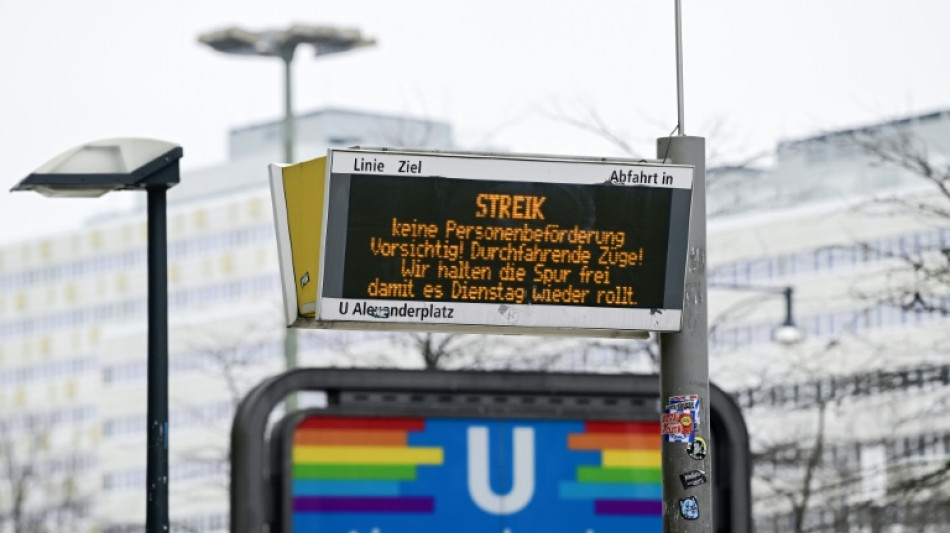
Germany hit by nationwide public transport strike / Photo: © AFP

Subway trains, buses and trams across Germany ground to a halt Monday in a public transport strike called by one of the country's biggest unions in a dispute over pay and conditions.
Bitter winter weather and icy pavements in large parts of the country meant that alternatives such as walking or cycling were more hazardous than usual for commuters.
The Verdi services sector union is pushing for shorter shifts for public transport workers and bigger bonuses for evening and weekend shifts.
It has called on almost 100,000 staff in 150 transport companies to take part in the stoppage.
In some states, the union is also pushing for pay increases of around 10 percent.
"If we don't go on strike for better conditions, the jobs will remain unattractive, as we have seen in the past few years," Verdi spokesman Andreas Schackert told public broadcaster ZDF.
The strike affects services in all states except Lower Saxony.
Mainline and regional trains are still running, but are not always the most reliable alternative.
Luis Hermann, a 23-year-old student in Berlin, said the regional S-Bahn in his part of the city, officially exempted from the strike, was also not running.
"There were works on the line and then the strike as well -- it's a bit annoying," Hermann told AFP, adding that his journey to the library had taken an hour instead of the usual 30 minutes.
Monday's strike follows warning strikes last month in several parts of the public sector, as unions sound the alarm over staff shortages and loss of purchasing power for workers.
The Berlin public transport operator BVG called the strike "disproportionate" and appealed to Verdi to return to negotiations.
"I can certainly understand that people are trying to strengthen their position and get money from their employer," said another commuter, 52-year-old consultant Frank Ewert.
"It's not great that we, as users of the BVG, are the ones who suffer as a result."
(L.Chastain--LPdF)