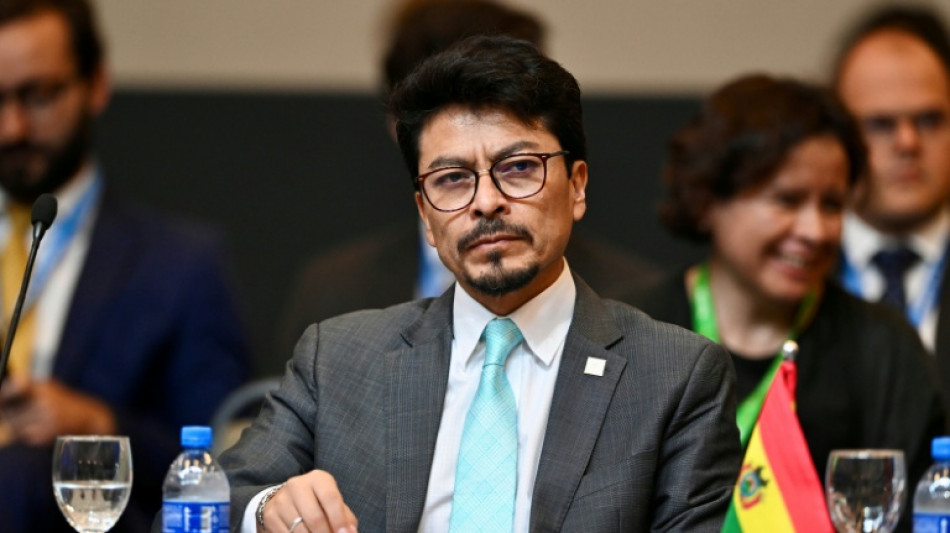
Bolivia wants closer US ties, without alienating China: minister / Photo: © AFP/File

Bolivia's new government plans to restore full diplomatic ties with Washington "as soon as possible," after a nearly two-decade rupture, Foreign Minister Fernando Aramayo told AFP.
Relations between Washington and the Andean nation were frosty during the rule of the country's longtime socialist leader Evo Morales.
In 2008, Morales expelled the US ambassador, after accusing him of conspiring against his government.
Washington responded in kind.
Eighteen years later, the country's new center-right President Rodrigo Paz is on a mission to redraw his country's alliances.
On Wednesday, Aramayo met US Secretary of State Marco Rubio in Washington to discuss reinstating ambassadors.
"The idea is to finalize this as soon as possible," Aramayo told AFP in a video interview Thursday evening from the US capital.
As part of the rapprochement, Bolivia has said it supports the return of the US Drug Enforcement Administration to help fight cocaine production in the world's third-biggest producer of the drug.
The challenge for Paz's government is to warm ties with Washington without sacrificing relations with Bolivia's biggest bilateral creditor, China.
Beijing has ploughed over $1.2 billion into building roads and mining infrastructure in lithium-rich Bolivia.
Aramayo ruled out having to choose between close ties with Washington or Beijing, saying that the Andean nation needed to engage in dialogue "with everyone."
That includes arch-foe Chile, to which Bolivia lost its entire Pacific coastline in a 19th century war.
Aramayo said that while Bolivia would not renounce its claim over its sea access, it "had every desire" to restore full ties with its neighbor.
Morales looms large over Bolivia's new government, which has vowed a radical break with the statist policies of the socialists.
He is wanted for human trafficking over his alleged sexual relationship with a minor -- an accusation he denies.
The coca growers' leader, who served three terms between 2006 and 2019, has been in hiding in his central Bolivian stronghold of Chapare since late 2024.
His supporters fear he could be arrested and extradited to the United States on drug trafficking charges, following in the footsteps of ousted Venezuelan leader Nicolas Maduro.
Aramayo said that establishing Morales' whereabouts was "not a priority" for the government.
"Our priority is to govern, restore confidence and consolidate economic stability," he said.
(A.Renaud--LPdF)