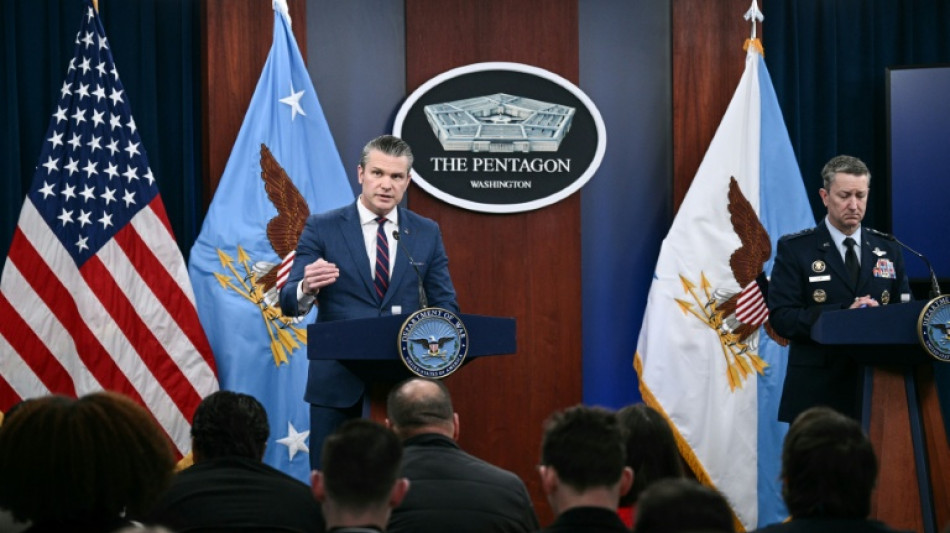
Trump team's Iran war rhetoric fuels backlash / Photo: © AFP/File

When the top US general spoke Tuesday of his "respect" for Iranian fighters, the remark underscored a striking divide between the restrained language of the military brass and the swaggering rhetoric used by President Donald Trump and his administration.
From Trump joking that it was "more fun" to sink Iranian warships than capture them, to Defense Secretary Pete Hegseth boasting that US forces were "punching them while they're down," critics say the administration's messaging -- reveling in the destructive power of the US military -- has been jarring.
Professor Rachel VanLandingham, a retired Air Force judge advocate who teaches the law of war, said the tone amounted to a "crass trivialization" of combat operations that suggested a "bloodthirsty" administration that "revels in the carnage."
"This type of dangerous language is unusual for modern American leadership, and it demonstrates an extremely cavalier attitude toward the death and destruction that war entails," she told AFP.
The rhetoric has also been amplified online, where official accounts circulate slick videos celebrating US strikes, blending real combat footage with imagery drawn from Hollywood films and video games.
It has marked a departure from the more restrained language traditionally used by American leaders during wartime, even when describing battlefield success.
- War as spectacle -
Hegseth has emerged as the administration's most outspoken public voice since Washington joined Israel in launching the campaign against Iran.
At press briefings and public events, the former television host has adopted an at times boastful, mocking tone in describing the offensive.
"This was never meant to be a fair fight, and it is not a fair fight. We are punching them while they're down, which is exactly how it should be," Hegseth said last week.
In a television interview, he described the sinking of an Iranian vessel as "a quiet death," while declaring that "the only ones that need to be worried right now are Iranians that think they're going to live."
He has also mocked allies uneasy about the widening conflict, referring to those who "wring their hands and clutch their pearls, hemming and hawing about the use of force."
Trump himself has used similarly combative language.
Recounting a discussion with a military official, the president said he had questioned why Iranian ships were sunk rather than seized.
"'We could have used it. Why did we sink them?'" Trump said he had asked.
"He said, 'It's more fun to sink them.'"
Critics say repeating the remark publicly reinforced the impression of a White House treating war as spectacle.
- Military contrast -
Pushback intensified after the official White House account posted a video montage celebrating US strikes.
Cardinal Blase Cupich, the archbishop of Chicago, condemned the clip as turning real violence into entertainment.
"A real war with real death and real suffering being treated like it's a video game -- it's sickening," he said.
"Hundreds of people are dead, mothers and fathers, daughters and sons, including scores of children who made the fatal mistake of going to school that day."
Top Democrats have accused the administration of sending contradictory messages about the conflict and demanded Tuesday that Trump, Hegseth and Secretary of State Marco Rubio testify before Congress on the war's objectives.
Military leaders, by contrast, have largely maintained a more traditional tone.
General Dan Caine, the chairman of the Joint Chiefs of Staff, drew attention when he was asked for his assessment of Iran's military capability and noted the commitment of its fighters.
"I mean, I think they're fighting, and I respect that," he told reporters.
(C.Fontaine--LPdF)