Alabama Power Lawyer Dismisses Landowner’s Resistance as ‘Ridiculous’ in Court

An Alabama utility lawyer described a local landowner’s refusal to allow construction on his property as "ridiculous stuff" during a heated court hearing Monday. Circuit Court Judge Jonathan Spann is now weighing whether to issue a temporary restraining order against Fenn Church, who has physically blocked crews from clearing wooded land for a transmission line despite a state Supreme Court stay of his previous legal victory.
COLUMBIANA, Ala. — Attorneys for Alabama Power did not mince words regarding the conduct of Fenn Church during a Shelby County courthouse hearing Monday afternoon, describing the landowner’s resistance to utility construction as "ridiculous stuff."
"Mr. Church—over and over again—has said he wants to be arrested," Alabama Power attorney Jim Byram told Circuit Court Judge Jonathan Spann. "He wants to be run over by a bulldozer. All this kind of ridiculous stuff."
The comments came as the utility sought a temporary restraining order against Church, a 60-year-old local property owner and trucking company operator who has spent months fighting Alabama Power’s effort to lay a major transmission line across his rural land. The utility argued that the court must intervene to keep Church and others out of the work zone to ensure safety for crews and visitors.
Church, however, maintains that he is merely exercising his right to stand on the edge of his property and protect it from unauthorized access. His lawyer, Martin Evans, clarified during the hearing that Church does not intend to defy a valid court order or place himself in physical danger.
"Mr. Church has stood on the property line and said he’s ‘not going to let Alabama Power come onto my property,’” Evans told the judge. "That’s a fact."
The legal dispute stems from a complex series of rulings involving eminent domain procedures and state jurisdiction. Last month, Judge Spann had ruled in Church’s favor, issuing a preliminary injunction that prevented Alabama Power from accessing his property. In that ruling, Spann found that the utility had failed to follow necessary condemnation procedures outlined in state law. He determined that Church was likely to succeed on the merits of his case and would suffer irreparable harm without the injunction.
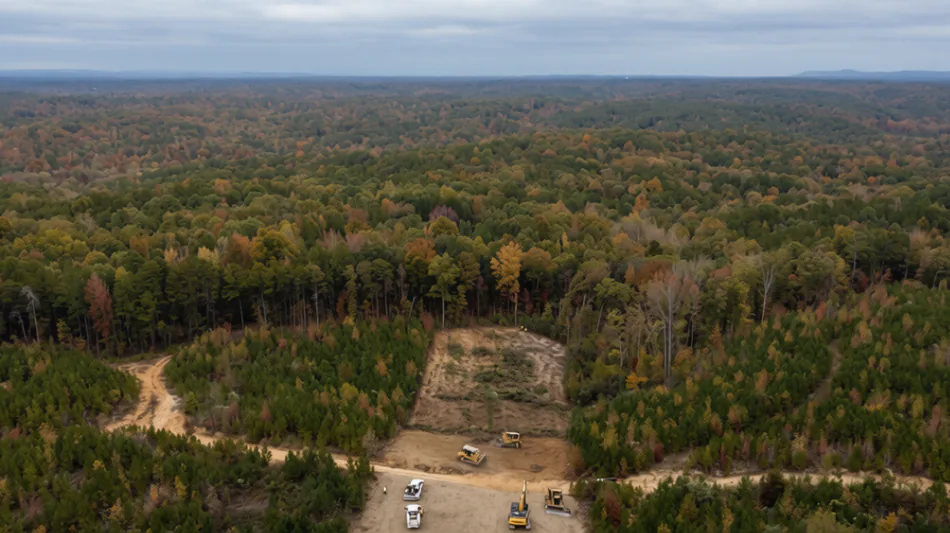
However, the legal landscape shifted on Oct. 21, when the Alabama Supreme Court stayed Spann’s preliminary injunction without providing written reasoning. Following this stay, Alabama Power crews moved in and cleared land up to Church’s property line by Nov. 3.
Tensions escalated at the boundary of the wooded tract. Under the remaining Alabama pines, an Alabama Power worker confronted Church, who had positioned himself to block further entry.
"Mr. Church, the crews are ready to proceed with the clearing," the worker told him. "If you and your group could step back 300 feet."
Church refused to move past his property line. "Y’all can have me arrested," he replied.
The worker responded, "That’s all I needed to know," before departing. Lawyers for Alabama Power cited this incident in their filing for the restraining order, arguing that Church’s refusal to maintain a safe distance necessitated judicial intervention.
During Monday’s hearing, Evans argued that the state Supreme Court’s stay did not grant Alabama Power an automatic right of entry onto Church’s property. He also urged Spann to dismiss the utility’s current lawsuit on procedural grounds, suggesting that the issues at hand should have been addressed in the previous cause of action rather than through a new filing. Evans implied that the utility’s decision to file an additional suit may have been an attempt to secure a different judge.
Byram countered that the suit was a proper mechanism for enforcing the Alabama Supreme Court’s decision, citing case law to argue against dismissal. When Evans attempted to bolster his argument with a comparison, he remarked, "You can find a case saying Pontius Pilate was a Jew if you try hard enough," to which Byram offered no immediate rebuttal.
The hearing grew contentious when Church’s lawyers attempted to introduce a memo from the U.S. Army Corps of Engineers into evidence. Alabama Power’s lawyers objected, arguing the document constituted inadmissible hearsay. Judge Spann did not admit the memo into evidence, but a copy provided to Inside Climate News by Church is signed by D. Lee Forsgren, identified as a senior official performing the duties of the Assistant Secretary of the Army.
The letter discusses stream crossings on the Church property and directed the commanding general of the Corps of Engineers to temporarily "pause evaluation" of an Alabama Power permit related to the project. Church stated that this memo resulted partly from the intervention of John Rich, a country music star and Trump-appointed special envoy for American landowners, who pledged support for Church’s cause.
Judge Spann expressed skepticism about issuing a restraining order while the underlying condemnation issues remain litigated in the Supreme Court. "How am I to enter a restraining order against the defendant when the underlying issue in the condemnation case is still being litigated in the Supreme Court?" Spann asked.
He noted that issuing such an order would involve "speculation and surmise" regarding how the state’s highest court might ultimately rule. Byram argued that the Supreme Court’s decision to lift the injunction implied they expected action to proceed, telling the judge, "If the Supreme Court was willing to wait and see what happened, they wouldn’t have stayed the preliminary injunction."
Byram further characterized Church’s request for the judge to maintain the status quo as an attempt to overrule the state Supreme Court. "He’s asking you to overrule the Supreme Court and stay the stay," Byram said. "It’s ridiculous."
Spann appeared to acknowledge the complexity of the situation, noting, "It sounds like he’s asking me to wait on the Supreme Court to issue a ruling in this case."
After hearing arguments from both sides, Spann stated he plans to issue a decision "quickly." Following the hearing, Church expressed optimism about the proceedings.
"I think the judge is on my side," Church said. "But we’ll just have to wait and see."
Alabama Power provided a statement via email after Byram declined to comment, reiterating their position that the restraining order is necessary due to Church’s refusal to maintain safety distances. "We will continue to respect the legal process as we responsibly pursue the infrastructure investments necessary to provide reliable service to customers across the state," a company spokesperson wrote.
The transmission line in question is believed by Church to support data center infrastructure, a connection he argues should not override property rights or necessitate routing through unwilling landowners. He has previously stated that the enjoyment of his property should not be trumped by what Spann had previously ruled was an arbitrary and capricious location of the line.
As the legal battle continues, the physical standoff at the edge of Church’s wooded land remains unresolved, pending Judge Spann’s upcoming ruling.
(N.Lambert--LPdF)