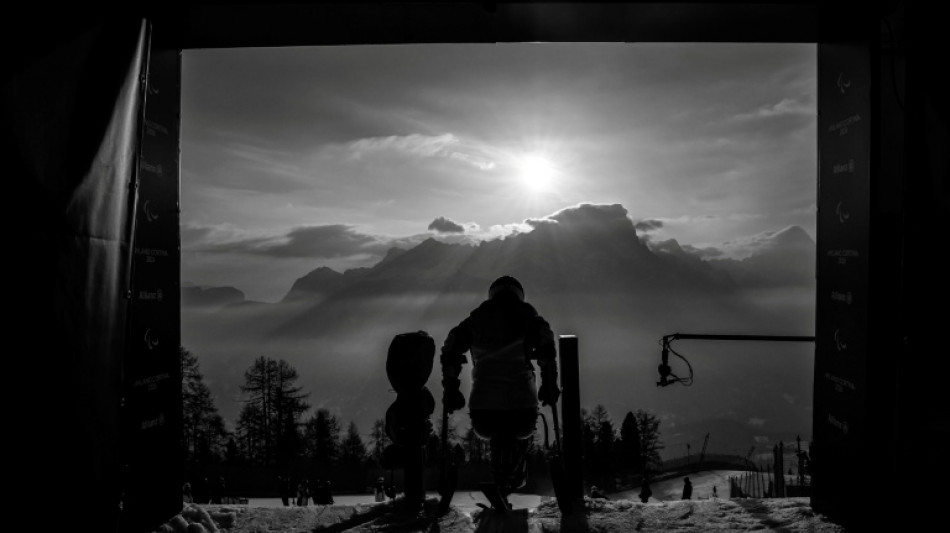
'Say a prayer and send it': Paralympic alpine skiers tackle fear / Photo: © AFP

What does it take to rocket down an icy sheet of Dolomite rock at over 100 kilometres per hour (62 mph) when missing a limb or suffering visual impairment?
Athletes at the Milan-Cortina Paralympics opened up about the sheer thrill - and challenge - of being elite alpine skiers, offering a glimpse into the speed, precision and fearlessness their sport demands.
Alpine skiing at the Winter Paralympics is divided into three categories.
Vision impaired competitors follow a guide down the piste, using a radio to communicate. Those who have a complete loss of vision ski in blacked-out goggles.
In the standing and sitting categories, many entrants are missing one or more limbs.
Athletes can compete in up to five disciplines, with the downhill reaching the greatest speeds.
Meg Gustafson, an American visually impaired skier, said that before a downhill: "I say a little prayer and then I send it."
The 16-year-old is classified as AS4, which means she can detect a squash-ball sized object at a maximum distance of six metres. She likened racing down Cortina's 2,105-metre Olympia delle Tofane piste to "flying".
"It's an indescribable feeling, especially in downhill... It feels like you're flying is the best way I can describe it. And just like being one with the hill."
Her team-mate Allie Johnson called the downhill in the Italian Alps "the scariest thing I've ever done".
"Being scared and doing things scared, that's what it is to me," said the 31-year-old. "It's not being scared, it's doing things even when you're scared."
American Anna Soens crashed early in her Paralympic debut in Cortina -- the first-ever downhill race of her career.
Asked what the experience had taught her, the sitting skier grinned and said: "Land straighter!"
- 'Race and survive' -
Even the most experienced and successful athletes know that their fortunes on the mountain hang on the finest of margins.
"If you don't set the line where you have to, you're (expletive)," said Swedish downhill standing gold medallist Ebba Aarsjoe.
High-speed crashes can result in terrible injuries for any skier. US skiing legend Lindsey Vonn nearly lost a leg after her fall on the same course in last month's Olympic Games.
Australian Paralympian Michael Milton, who skies on one leg, was tempted out of retirement to compete at the Milan-Cortina Games -- much like Vonn -- and the 52-year-old said the buzz was what drew him back.
"One of the things you come back for is the emotion. It's the pressure. It's the feeling of standing at the start, (soiling) your pants because you're scared of what you're about to ski down, and then having the mental side of things, to be able to overcome that," Milton said.
For Slovakia's Alexandra Rexova, already a double bronze medallist in the women's visual impaired category, the risks are worth taking.
"Skiing means everything. I'm visually impaired. I'm a disabled person, so it opened new doors for me," the 20-year-old said.
"I'm glad I can race here, to know many other athletes from other countries and enjoy the time here and race and survive."
(A.Laurent--LPdF)